
Traditional Potters’ Livelihood on the Verge of Disappearance
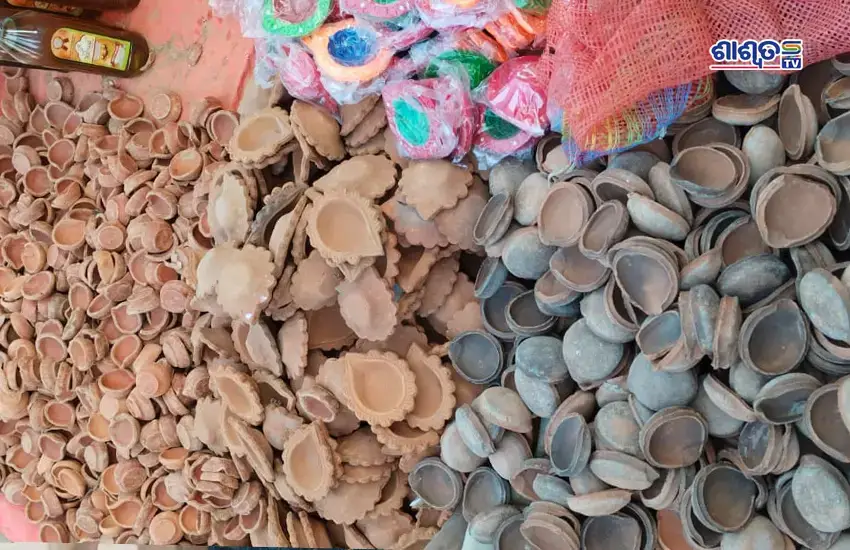
The festival of lights, Diwali, symbolizing the triumph of light over darkness, is just a day away. On this night of Amavasya, the darkness is illuminated by the glow of lamps. In earlier times, people from the Kakatpur and Astaranga regions of Puri district celebrated Diwali by lighting clay lamps filled with oil and cotton wicks, placed in earthen trays and pots. Potters’ families, who made these clay lamps, earned a decent income from their sales during the festive season.
Today, however, people decorate their homes with colorful electric lights instead of traditional clay lamps. With the rise of modernity and glitter, the demand for earthen lamps has drastically declined. This has become a matter of concern for hundreds of potter families in villages like Muduli Sahi near Yogeshwarpur, Ostapur near Astaranga, and Muduli Sahi in Kakatpur. As urban and rural people alike are shifting their interest from earthen lamps to Chinese-made electric lights, potters are losing their only source of livelihood.
Bhramarabar Muduli, a lamp artisan from Ostapur, stated that although they make clay lamps every year for Diwali, most of them remain unsold, making it increasingly difficult to support their families. Adding to the worry, today’s younger generation is not interested in learning or continuing the traditional craft of making earthen lamps, pots, or decorative household items.
Saroja Muduli from Muduli Sahi village in Yogeshwarpur expressed concern that if this continues, the potter’s profession will disappear in just a few years. He added that if the government took special steps to support potter families, this traditional occupation could still be preserved. Otherwise, there is no doubt that the day is near when this ancestral livelihood of the potters will vanish completely.