
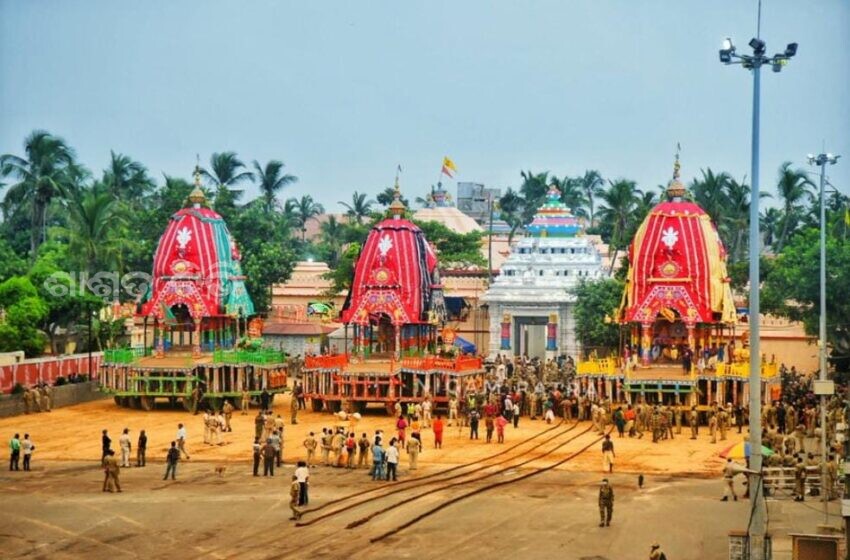
Hera Panchami: A Mesmerizing and Emotionally Stirring Festival at the Holy Mausima Temple
Today, the sacred Hera Panchami ritual will take place at the Mausima Temple, a fascinating, thrilling, captivating, and emotionally moving celebration known and revered across the world.
Lord Jagannath’s life and rituals are not much different from the everyday experiences of common human life. His daily routines, journeys, festivals, and every moment reflect human-like events. One such unique ritual during the Rath Yatra is Hera Panchami. “Hera” means “to see” or “to visit.” On this day, Goddess Lakshmi visits Gundicha Temple to see Lord Jagannath, who has traveled there with his elder brother Balabhadra and younger sister Subhadra—leaving her behind at the main temple.
This visit by Lakshmi reflects her displeasure for being left out, and thus the event is named “Hera Panchami,” observed on the fifth day of the Rath Yatra, though the actual ritual occurs on the sixth day of the waxing moon of Ashadha (Ashadha Shukla Shasthi).
Although Lord Jagannath is a deity, his divine plays (leela) resemble those of human beings. Hera Panchami is an example of his human-like marital play (dampatya leela) with Goddess Lakshmi. According to legend, upset with Lord Jagannath for not taking her along, Lakshmi goes to express her anguish to Goddess Vimala at the Srimandir and seeks her advice.
Vimala consoles her and advises her that if one’s husband acts unwisely or unkindly, the wife must cleverly attract him back. She gives Lakshmi a magical powder called Mohana Churna to use on Lord Jagannath.
On Ashadha Shukla Shasthi, Lakshmi, carried in a decorated palanquin (bimana) with pomp and musical instruments, proceeds to Gundicha Temple. She locates the Nandighosha chariot of Lord Jagannath and, while seated in the palanquin, receives offerings and worship from the Patimahapatra servitor on behalf of the Lord.
Then, near the Jay-Vijay gate of Gundicha Temple, Lakshmi sprinkles the Mohana Churna given by Vimala onto Lord Jagannath as described in scriptures like Yatra Bhagavata and Bamadeba Samhita. In response, the Lord sends her his garland (Agyan Mala), symbolizing his promise to return to the Srimandir after three days.
However, another event unfolds. As it becomes evening (Sandhyadhupa), the veil (Tera) is drawn, and Lakshmi is no longer able to see her beloved Lord’s face. Upset, she expresses her displeasure by secretly breaking a piece of wood from the Nandighosha chariot before returning.
This act is not considered an outburst of anger but a sign of deep love and longing. Though she has received the Lord’s promise to return, her sorrow over not being able to see him longer drives her emotional response.
Another beautiful aspect of this ritual is the contrasting nature of her return. While she sets out amid celebration, music, and fanfare, she returns quietly via Hera Gohiri Sahi lane without any drums or cymbals—almost in secrecy. According to temple servitor Rabindranath Pratihari in his book Ajnamala Rahasya, this reflects her feeling of guilt over breaking the chariot, causing her to return in silence and humility.
Ancient texts like Rathachakada Pothi mention that King Kapileshwar Deb institutionalized this emotional and symbolic ritual of Hera Panchami, which continues to touch the hearts of millions every year.