
Mahapanchuka Observed with Festivity: Mathas and Temples along Prachi River Become Celebration Hubs
Kakatpur (Tushar Dixit), 24/11 — The last five days of the holy Kartika month (from Kartika Shukla Ekadashi to Purnima) are celebrated as Panchuka. These five sacred days are also known as Mahapanchuka, Bak Panchuka, Bhishma Panchuka, or Vishnu Panchuka. Those who are unable to follow the month-long Kartika brata (habisha) observe it for these five days instead. Some devotees even start from Anala Navami or Radha Pada Darshan Day, extending their fasting to seven days.
During this period, Hindus give up non-vegetarian food and consume only pure, sattvic meals. It is said even birds refrain from consuming meat during these days, which is why it’s also called Bak Panchuka.
According to the scriptures, on his bed of arrows, Bhishma Pitamah imparted knowledge of Rajadharma, Mokshadharma, and Dana Dharma, which was heard by the Pandavas along with Lord Krishna. Pleased, Lord Vasudeva (Krishna) said, “You are blessed, for you have revealed the profound secrets of dharma. On Kartika Ekadashi, you desired water, and Arjuna provided Ganga water using his arrows, satisfying your body, mind, and soul. Therefore, whoever offers water to you during these five days will also please me.”
This is why Bhishma Panchuka is observed every year. Many observe this fast with hopes of being blessed with children. It is believed that during these five days, the 33 crore Hindu deities come closer to humankind. Offering one lakh Tulsi leaves to Lord Vishnu during this time pleases all gods and grants boons. As the scripture says:
“Sarvadeva Namaskarah Keshavam Pratigachchhati” — All salutations to the gods ultimately reach Lord Vishnu.
The last three days of Panchuka — Trayodashi, Chaturdashi, and Purnima — are considered especially auspicious. During this time, Akashadeepa (sky lamps) are lit in every village to illuminate the path for departed souls and ancestors lost in darkness.
Every day of this holy month is considered a festival. In Dandakaranya, sages once longed for a vision of Lord Rama, who granted them a boon that they would be born as Gopis in Dwapara Yuga and attain him in the form of Krishna. Thus, in devotion, these Gopis (sages) would bathe early each day during Kartika month and establish sand idols of Krishna on the banks of rivers, seas, ponds, and waterfalls, offering him sandalwood, flowers, and lamp offerings while praying for a husband like Krishna.
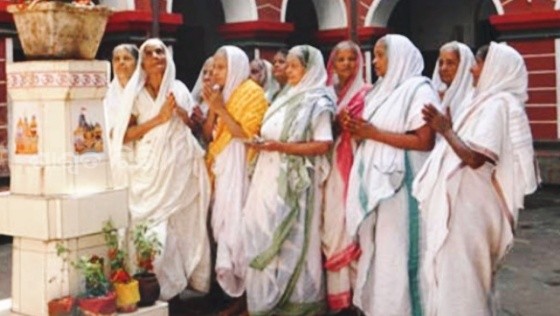
That tradition continues to this day. Widows and religiously devout people offer Rai-Damodar puja at the base of sacred Tulsi plants throughout the month. During Panchuka, temples and mathas celebrate Rasa Utsav. In the evening, idols of Radha and Krishna are taken in processions to elaborately decorated groves (kunjas), where they are seated. Chapters from the Sharad Rasa Leela scripture are recited each day in front of them. The rituals end with Bhog offerings, Aarati, and the deities are returned to their sanctums.
The grand finale takes place on Kartika Purnima, marking the conclusion of the Rasa Utsav.
The Prachi valley becomes vibrant with celebration. Many mathas and temples conduct their unique rituals during the festival, including Antahbedi Math, Radhakanta Math, Arka Math, Siddha Math, Ahmunia Math, Gopal Math, Gurudev Math, Rohini Kund Math, Vishwamitra Math, Chakia Math, Deuli Math, Atibadi Math, Panchavati Math, Bant Math, Apsara Math, Nuamath, and Radhakanta Temple.
Devotees and pilgrims gather in large numbers to witness the Rasa Utsav and seek blessings from Radha and Krishna. The Prachi valley’s mathas and temples are immersed in festivity, glowing with devotion and celebration for Pancharasa.