
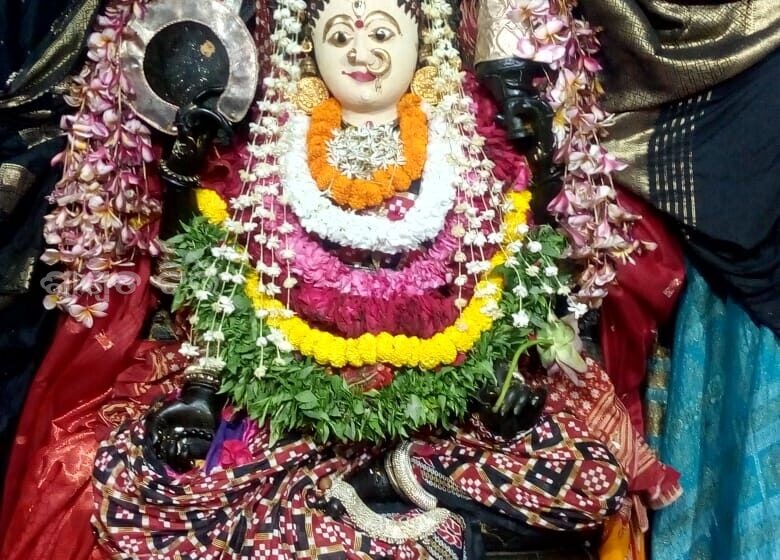
Jhamu Yatra on the Fifth Tuesday of Chaitra Held Only at Kakatpur’s Maa Mangala Temple
In Odisha, various Shakti Peethas and village deities observe Jhamu Yatra on the day of Pana Sankranti or Maha Vishuba Sankranti as part of traditional rituals. However, it is only at Kakatpur’s Maa Mangala Temple that Jhamu Yatra is uniquely observed on the fifth Tuesday of the month of Chaitra (which sometimes falls on the first Tuesday of Baisakha). For this reason, Jhamu Yatra at Maa Mangala’s temple is particularly renowned.
This year, the unique tradition will be held on the 11th. Late at night, the sacred Kalika Dance takes place. Maa Mangala is revered as Adyashakti (Primordial Power) and Yogamaya. Scriptures describe her as Durga and Kali in different forms. Hence, the Kalika Dance is observed on the third, fourth, and fifth Tuesdays of the Yatra, performed late at night.
A devout servant of Maa, chosen from the Khamarai caste, strictly follows a pure diet (habishanna) from Dol Purnima onward. On the designated Tuesday night, the sevak adorns themselves in a Kali costume, performs ritual chanting before the goddess, and receives a sacred sword (khanda) and garland from the temple priests. They then perform the Kalika dance in the temple premises and surrounding areas.
One more spiritual tradition is the offering of “Chudaghasa, Dahi, and Goat Meat” made by the Brahmin Sasan families. These families prepare this special offering for the blessings and prosperity of their households. After the rituals, they sit outside the temple and eat the offering as Prasad. Some devotees, in fulfillment of vows, bring goats or rams to the temple and offer them to Maa. These animals are then ritually sacrificed near the banks of the River Prachi, in front of the southern deity Dakshina Chandi, where families and friends gather to enjoy the meat feast. On this occasion, the riverside turns into a festive ground.
Devotees believe that Maa Mangala’s blessings bring peace and prosperity to the family. Women are often seen pouring turmeric water, applying sindoor (vermilion), and offering flowers at the northern side of the temple, praying for family well-being. Others spread freshly harvested rice and black gram in the temple courtyard to ward off planetary doshas, as per local belief. Some even take pieces of old flags (Netra) unfurled during Netrotsav to keep at home, which is believed to bring success in marriage, construction, and other auspicious events. Many also collect flowers dropped during the Ghanta Patua dance with great devotion.
The Jhamu Yatra, from Netrotsav to Firewalk, is a tradition rooted in deep devotion and belief. The Netrotsav, held on the first Tuesday of Chaitra, marks the beginning. The Chakra (disc) atop the temple is bathed in pure water, honey, and milk. A new ceremonial flag is worshipped and then paraded three times around the temple before being raised to the top of the spire, replacing the old one.
From nearby villages, devotees (mainly Yadavas) come in groups with their traditional chirata instruments, singing and dancing in celebration. This Netrotsav marks the start of a month-long Khama Yatra, with fairs and stalls set up around the temple. The grand Jhamu Festival is held on the fifth Tuesday.
For the fire-walk ritual, a 10-foot-long and 2-foot-deep trench is filled with burning embers. Patua performers from Jagatsinghpur and local Bhui Patua communities walk barefoot over the fire after collecting holy water (ghata) from the Ghantatola ghat on the River Prachi. This is the essence of Jhamu Chaliba (walking over fire). After the fire-walk, they perform the Patua dance in front of the temple, marking the ceremonial end of the Jhamu Yatra.
Patua Dance: A Major Attraction
The Patua dancers have long played a crucial role in Maa Mangala’s Jhamu Yatra. They wear wooden stilts, balance rods on their heads, and ring bells while dancing in different styles. This adds a spiritual and joyful atmosphere, captivating the devotees.
Pali Yatra and Varuni Connection
The festive season at Kakatpur’s Mangala Peetha begins with Chaitra. From the first to the fourth Tuesday, the Pali Yatra takes place, and on the fifth Tuesday, the Jhamu Yatra. This fifth Tuesday may fall on the last Tuesday of Chaitra or the first of Baisakha. This year, it falls on the last Tuesday of Chaitra, hence it is considered a Varuni Yatra, as per temple priest Raghunath Dixit.