
The Festival of Devotion and Faith – Khai Phoda Yatra
In the age of science, faith still holds its ground. Even today, devotees have deep and unwavering belief in God, a belief so strong that even science appears to fall behind. The festival of Khai Phoda, also known as Kanta Phoda, is one such celebration of devotion and belief.
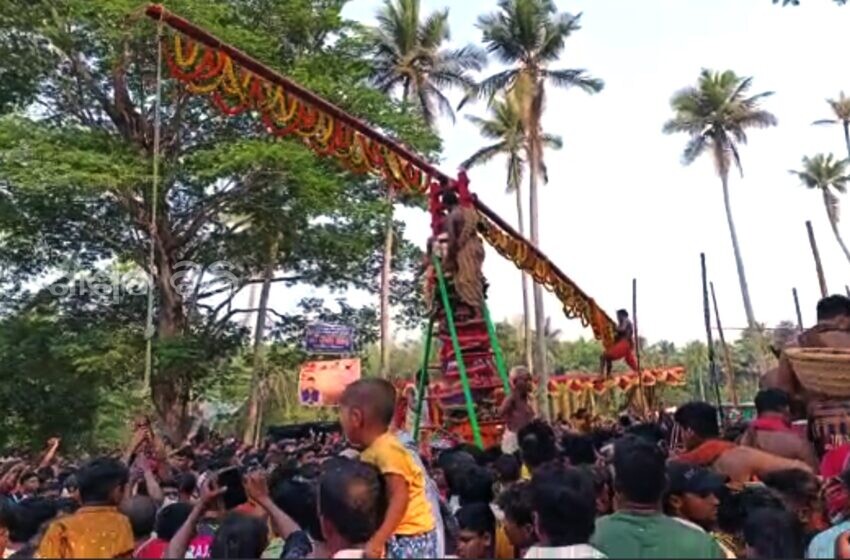
With this strong belief, hundreds of devotees pierce their backs with sharp hooks and hang from structures about 30 feet high. They believe that by doing so, they will receive the blessings of the Goddess and that their wishes will be fulfilled—childless couples will be blessed with children and various ailments will be cured.
Thousands of devotees gathered today in front of the Gadachandi temple in Satyabadi Bheemapur for this purpose.
The otherwise calm village of Satyabadi Bheemapur becomes bustling with activity during this time. Devotees flock to the sacred shrine of Goddess Gadachandi. On the day of Mahavishuba Sankranti, it is believed that if a devotee undergoes the ritual of having their back pierced and hangs from a Khai (a tall wooden structure), their wishes will come true.
Following this belief, over a hundred “Manasikdhari” (vow-keepers) have hung from Khai structures nearly 30 feet tall, seeking the grace of the Goddess. Despite the scorching heat, these vow-keepers maintain utmost discipline and dedication.
A month before the festival, the Manasikdhari start consuming a simple vegetarian diet called Havishanna. Every Tuesday, they perform a ritualistic Kanta Puja (worship involving hooks) near the Goddess. For the entire month, they live separately from their families as a part of the ritual.
On the main day of Mahavishuba Sankranti, the Manasikdhari gather near the temple and surrender themselves to the Goddess. After completing specific religious procedures, the Kalisis (assistants) receive divine permission and escort the Manasikdharis to the temple pond. There, the hooks are pierced into the vow-keepers’ backs, and then they are taken in a procession from the pond to the Khai. Once they reach the Khai, both the Kalisis and Manasikdharis hang from the tall structure using ropes, with the hooks embedded in their backs.
Traditionally, the Kalisi hangs first, followed by the Manasikdhari. During this time, women from the Khajuri and Fingaa communities believe that eating offerings thrown from the hanging participants will bless them with children. Touching the Manasikdhari or Kalisi while they are hanging is believed to cure diseases and bring blessings.
This ritual has been followed since ancient times. Devotees believe that once they dedicate themselves to the Goddess and undergo the piercing, no harm befalls them. Any vow or prayer made is believed to be fulfilled. Childless women are believed to have children, and those suffering from ailments find relief by simply touching the Manasikdharis as they hang.
In the era of science, faith remains undefeated. Devotees continue to place their immense trust in God—faith so deep that science is left far behind.