
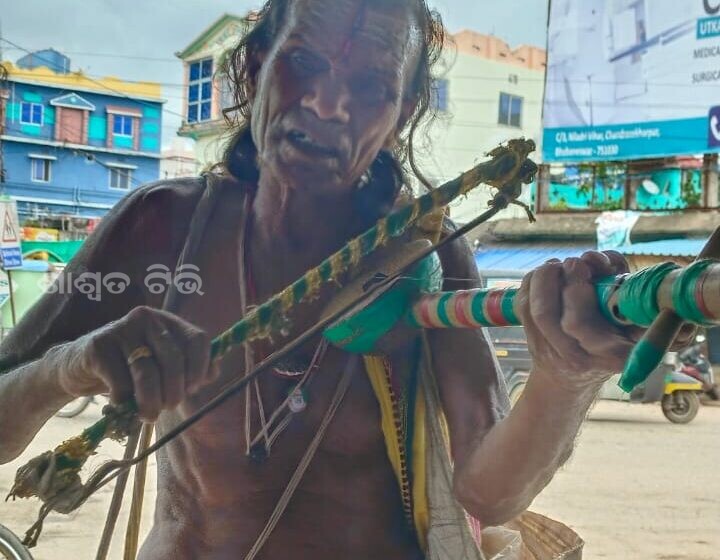
The Fading Voice of Kendraara
Kakatpur, 25/7 – “Chant the name of Lord Ram, or else Yama, the god of death, will tie you up and take you away,” goes the traditional song once sung by wandering yogis. When such verses, accompanied by the distinctive voice of Kendraara, echoed at the doorsteps of households, tears would unknowingly stream down the cheeks of women and homemakers. Wiping their tears, they would offer alms to the yogi standing before them.
But today, the voice of those yogis—the Kendraara sound—has nearly vanished from Odisha’s art and cultural scene. In earlier times, such yogis, mostly from the Nath sect, took up this ancestral occupation and made it their livelihood. Once a vibrant presence in the villages, they now face the threat of extinction. The sound of Kendraara, once deeply rooted in rural life, especially resonated with women and elders, evoking a sense of emotional connection and spiritual reflection. Even when alone at home, a housewife would recall the yogi’s devotional verse “Bhajuki Na Ram Naam” and silently recite it, overwhelmed by its depth and sentiment.
However, modernity has gradually devoured this cultural tradition, causing it to fade away. The emotional stories of singers like Tika Govinda Chandra are now being forgotten. Writing about this art today naturally brings with it the responsibility of documenting the associated folklore and history.
According to the yogis, their lineage traces back to Lord Shiva. Wearing rudraksha beads, saffron robes, and bearing the name of Mahadev, these wandering ascetics roamed the land, chanting the names of gods while sustaining themselves through their art and occasional alms. In the past, they enjoyed royal patronage, with kings and landlords often providing them land. However, being physically unfit for agriculture, they were allowed to practice their performing art and seek alms as a livelihood.
These yogis would typically begin their practice around the age of 17 or 18. The elders in the community recall how once even kings and landlords gave them land for sustenance. But times have changed. Today, songs like “Bhajuki Na Ram Naam” and the Kendraara voice no longer find an audience. People no longer appreciate or resonate with such ancient folk music, leading to its gradual decline.
Now, spotting a Kendraara yogi has become a rare occurrence. As a result, this traditional art form has drifted far from our present-day culture. To prevent this cultural loss, the government needs to take active steps to preserve and promote such dying folk traditions.